
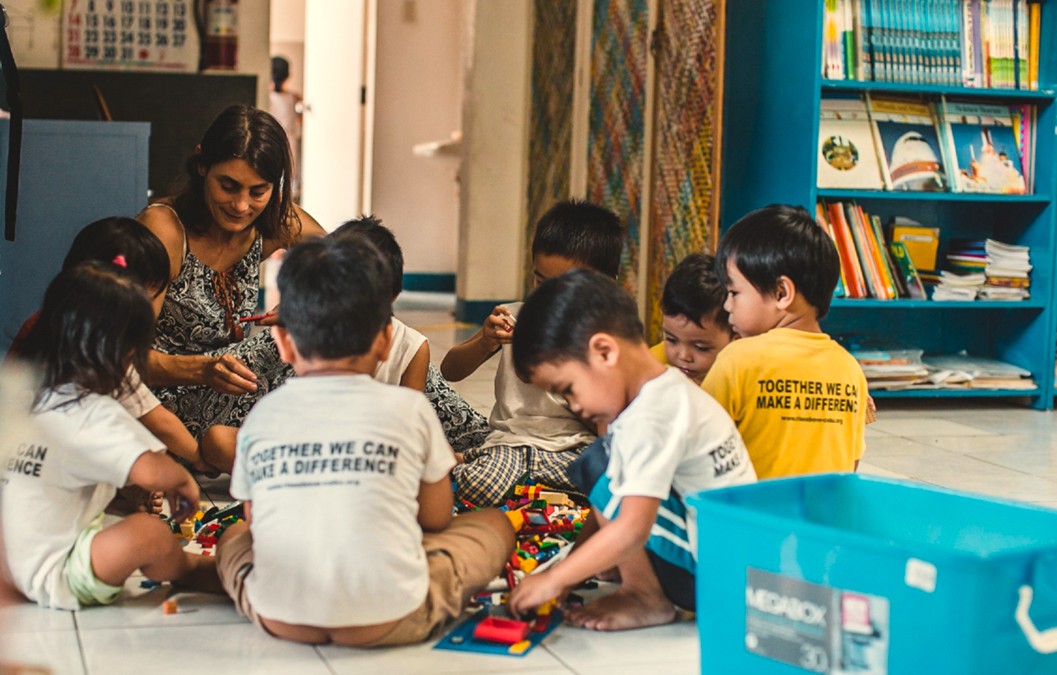
Supporting vulnerable communities through local partnerships in Cebu & Bohol
In the Philippines, inhabitants with very limited resources suffer from natural disasters, unstable housing, and uncertain income. For children growing up in these conditions, education is not always a given possibility.
This is where SNI’s work quietly steps in — not with quick fixes, but with steady, practical support that helps create more stability over time.
A Place to Learn, and Simply Be a Child
SNI supports community-based centers where children can come each day to learn, eat, and feel safe. For many, these spaces offer something they don’t often experience elsewhere: routine.
Here, the day has structure. There is time to learn, to play, and to be together. Small things matter — washing hands before meals, brushing teeth, sitting down together to eat. These are simple habits, but they build a sense of normalcy and care.
Just as important are the relationships. Children learn how to treat one another with respect, how to work together, and how to be part of a group. Over time, you can see the difference — in their confidence, in how they interact, in how they begin to see themselves.
Supporting Families Along the Way
Behind every child is a family doing its best to cope with difficult circumstances. Supporting children means supporting those families too.
Through livelihood initiatives, mothers are given the chance to earn an income — for example by creating bags from upcycled materials, learning gardening, sewing, jewelry making. It may seem like a small step, but it can ease daily pressure in a very real way.
When there is even a little more stability at home, children feel it. It becomes easier for them to stay in school, to focus, and to imagine a future that looks different from today.
Starting Early: The Importance of the STEPS Program
In many underserved communities, children begin elementary school without the basic skills needed to succeed. This gap is often not due to lack of ability, but to limited access to early learning opportunities — especially in areas where families are focused on meeting immediate needs.
The STEPS (Specialized Training and Education for Progressive Students) program addresses this challenge by focusing on early childhood education.
By providing structured preschool learning, the program helps children:
- Build early literacy and numeracy skills
- Develop confidence and social interaction
- Become familiar with a learning environment
- Grow curiosity and readiness for school
To expand this program to additional communities, new classroom space is being developed — creating a safe and dedicated environment where more children can access early education.
This early intervention is particularly important in communities affected by instability, as it helps children build the foundation they need to continue learning despite challenging circumstances.

Building Stability Through Long-Term Commitment
What connects these initiatives is a shared understanding: meaningful change takes time.
By supporting both education and family stability, these programs go beyond short-term solutions. They create environments where children can grow consistently, even when external conditions remain uncertain.
For many families, this support represents more than access to education — it creates a sense of stability, possibility, and forward movement in situations where these are often difficult to maintain.
Through our continued partnership with local organizations in Cebu and Bohol, SNI remains committed to this steady, long-term approach.
Looking Ahead
The need for accessible, quality education remains significant, particularly in communities that are vulnerable to economic and environmental challenges. Expanding early childhood education and strengthening community-based support systems will continue to be key priorities.
With continued support, these initiatives can reach more children at a critical stage in their development — helping them build the skills and confidence they need to navigate an uncertain future.