One Field, One Team: Where Every Child Belongs

Hungary Summer Camp Update

Every summer, children from very different circumstances come together for one special week in Hungary.

Some live in children’s homes. Others come from disadvantaged families and villages where opportunities are limited. Some come from families connected to the project as sponsors and supporters.

Then they step onto the football field.

And suddenly, those differences matter a lot less.

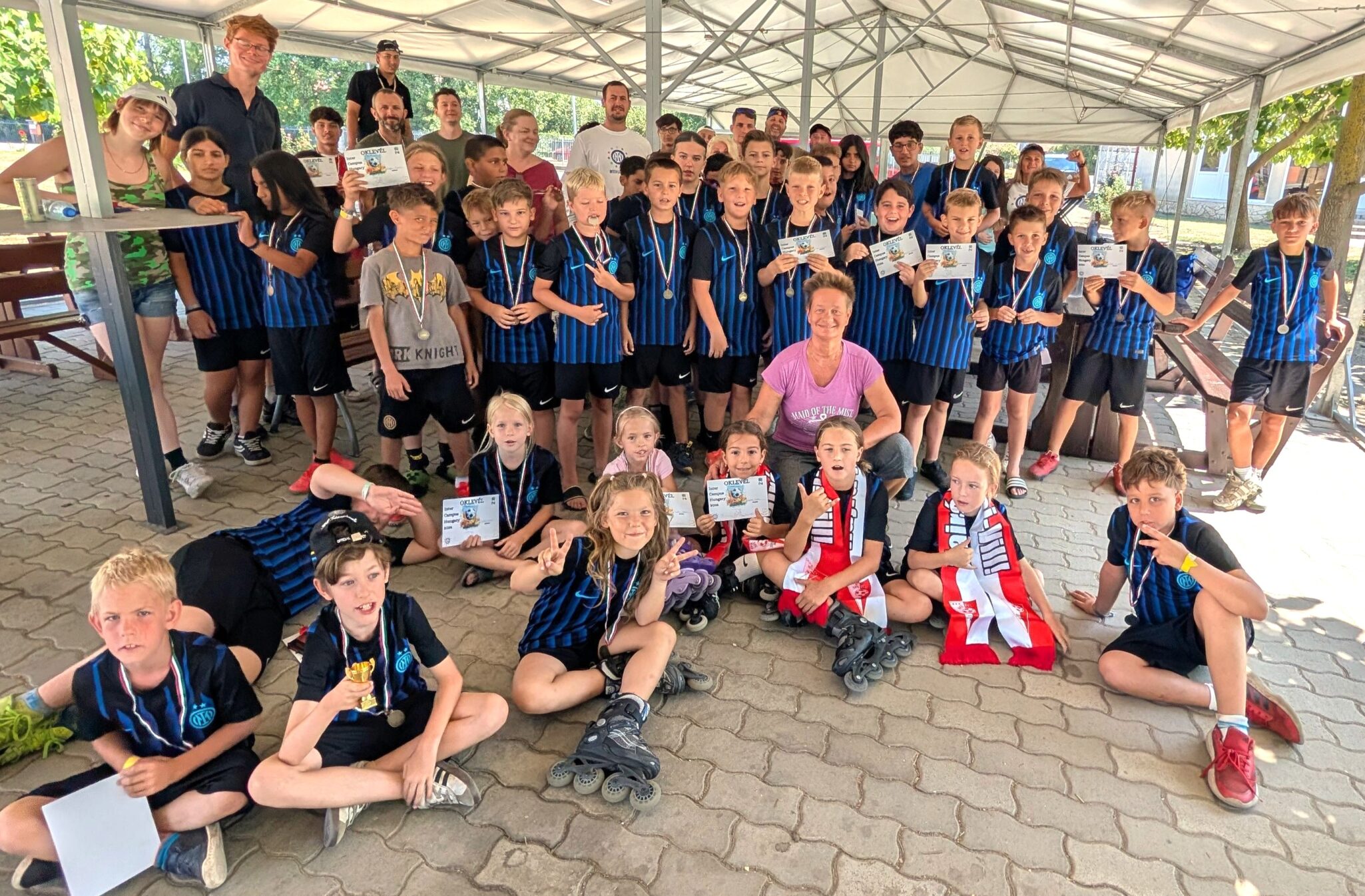
This summer marked the 16th Inter Campus Hungary Camp — another week of football, friendship, challenges, laughter and shared experiences that reminded us why this project has continued for so many years.

As our local project manager Andrea described it:

“When children are given the opportunity to play, share and grow together, something very powerful happens.”

Different Backgrounds. The Same Team.

Children from the Cseppkő Children’s Home in Budapest joined children from poor and disadvantaged villages where Inter Campus has been active for years.

They arrived with different experiences of childhood and very different circumstances at home.

But football has a remarkable ability to strip those differences away.

Teams have to communicate. Players have to trust one another. Someone has to pass the ball. Someone else has to be there to receive it. Children celebrate together when things go well and learn to encourage one another when they don’t.

Soon, they are no longer children from a foster home, a disadvantaged village or a sponsor’s family.

They are simply teammates.

The days were filled with football, games, challenges and plenty of competition. But some of the most important moments happened away from the scoreboard.

Children encouraged each other, helped when somebody was struggling and celebrated one another’s successes.

New friendships began. Old friendships grew stronger.

And children who might otherwise never have met discovered how much they actually had in common.

Much More Than Football

For some of the children, this was their first experience of a football camp and spending a week living as part of such a large community.

For others, it was an opportunity to return, meet old friends and strengthen relationships that have developed through Inter Campus over the years.

Camp means sharing meals and rooms. Waiting for each other. Helping somebody who needs support. Talking, laughing and sometimes solving disagreements.

There were loud moments, silly moments and endless energy — but also quieter moments when the children simply sat together and talked.

Those experiences are part of what makes the week so valuable.

Sport creates a common language.

On the football field, every child can participate. Every child can contribute. And every child can experience what it feels like to belong.

Social, economic, language and cultural barriers that can seem enormous elsewhere can become remarkably small when there is a football rolling between the children.

Mitch and Robbie Return to Camp

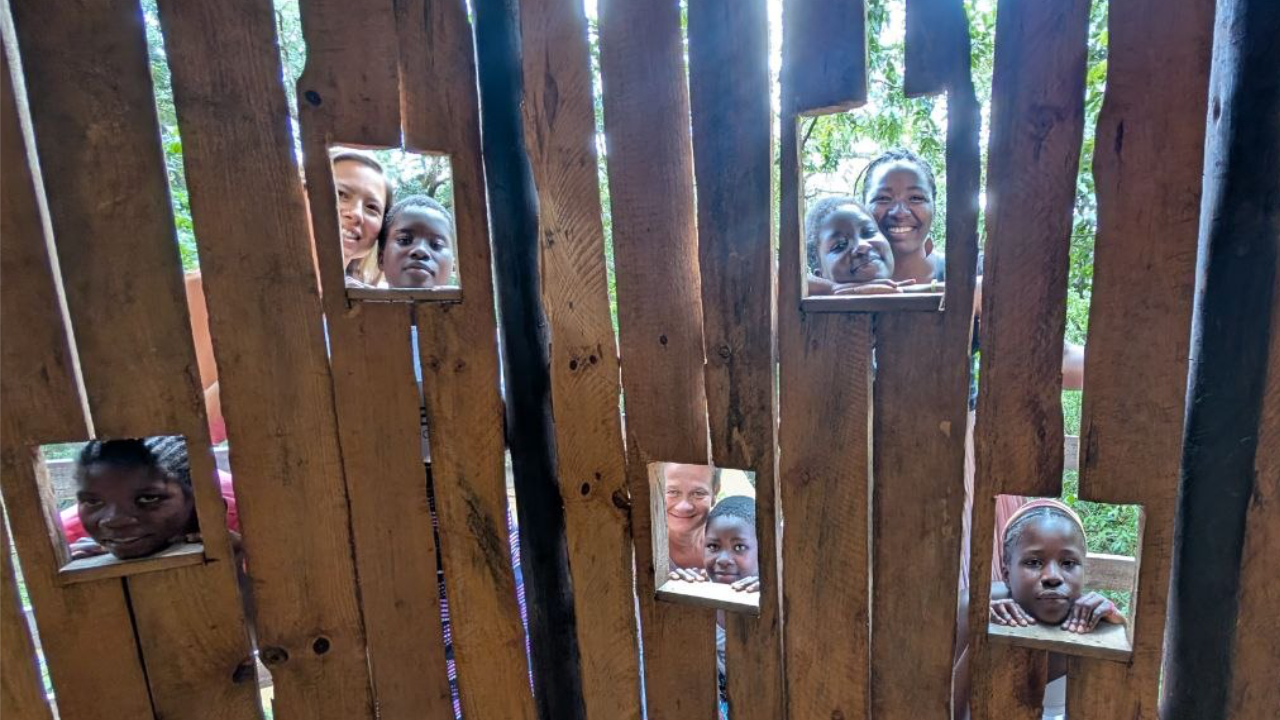
This year, SNI founder Mitch Steiner once again joined the camp — together with his eight-year-old son, Robbie.

Their participation represents something that has always been important to this project.

We don’t want there to be a dividing line between the children receiving support and the people providing it.

The camp is a shared experience.

Robbie plays alongside children whose everyday lives may look very different from his own. They eat together, laugh together, compete together and experience the same summer days.

For the children, it creates another connection beyond their usual environment.

And for the families and supporters involved with SNI, it offers something equally valuable: the opportunity to understand one another not through statistics or stories about poverty, but simply by spending time together.

Integration works both ways.

When children meet as children first, backgrounds and labels have a chance to disappear.

That is one of the lessons we hope they carry home long after camp is over.

The People Behind the Week

A camp like this does not simply happen.

Behind every training session, meal, activity and game is a group of people giving their time to make it possible.

This year, high school and university students volunteered alongside coaches and helpers from Hungary and other countries, dedicating their summer days to the children.

From early morning until the final activity of the day, volunteers helped organize the countless details that make a camp work. They coached and played, prepared activities, solved problems, listened when someone needed attention and made sure children felt included.

Some brought professional coaching experience.

Others simply brought energy, patience and a willingness to help wherever they were needed.

All of them brought something valuable: their time.

For young volunteers in particular, the experience also creates another kind of cultural and social exchange. They aren’t observing the realities faced by disadvantaged children from a distance. They are spending their days together, building relationships and taking responsibility for making the week special.

The camp therefore leaves its mark not only on the children who attend, but also on the people who volunteer.

“I've had a great time and I'm hoping the children also did. My favorite memory is playing games under the stars near the campfire. These kids are such good souls, I gave them all the love I could give. I can't wait until the next camp!”

16 Years of Showing Up — Love is the Answer has done it

Perhaps one of the most meaningful things about this year’s camp is simply the number attached to it. 16.

Sixteen Inter Campus Hungary summer camps mean children have trained throughout the years and returned year after year. Friendships have developed. Volunteers and coaches have continued giving their time. And a community has grown around the project.

What stays with us are the friendships being formed between children who might never otherwise have met. The confidence of a child discovering that they belong. The older student spending a week of their summer helping someone younger. The coach who travelled to Hungary to give their time. And children from completely different circumstances sitting together at the end of a long day as friends.

That is the real purpose of the camp.

Not to make every child the same, but to create a place where their differences don’t determine whether they belong.

To Andrea, our coaches, students and volunteers, and to everyone who helped make these days possible: Thank You.

And to our sponsors and supporters: your commitment allows experiences like this to continue year after year.

Sometimes making a difference starts with something remarkably simple.

A field. A football. And the opportunity to play together.

Coaching with love

From Learning to Earning

Building Skills for the Future at Bana Mayele

At the Bana Mayele Center in Kinshasa, our ambition goes beyond providing children with a safe place to live and an education.

We want to help prepare them for what comes next.

As children grow into young adults, education needs to be accompanied by practical opportunities: the chance to discover a profession, develop useful skills, earn their first income and experience the confidence that comes from becoming more independent.

This summer, that vision has continued to take shape at Bana Mayele — through welding, professional beauty and hairdressing training, and a new water-delivery initiative that will allow young people from the center to serve their surrounding community.

12 Boys. Three Centers. Welding the New Skill.

This summer, 12 boys between the ages of 13 and 18 participated in practical welding training.

Four came from Bana Mayele, four from Bon Berge, and four from Dieu est Amour, bringing together young people from three different centers to learn side by side.

For the boys, the course is about much more than learning how to join pieces of metal.

Welding is a practical trade that can become a profession. For teenagers approaching adulthood, learning such a skill can provide an important first step toward earning their own income and building an independent future.

It also gives them something less tangible but equally valuable: the experience of learning to do something they could not do before.

A new skill creates confidence. And confidence can create ambition.

By opening the training to young people from two other centers, the opportunity created at Bana Mayele could also be shared beyond its own walls.

From our Fountain to Community Water Delivery

Another couple of youth who grew up at Bana Mayele are preparing for a very different responsibility.

SNI recently purchased an OMOTO Japanese tricycle capable of transporting up to 2.5 tons of water for the center. Three of the older boys are now working toward obtaining their motorcycle licenses so that they can operate it.

The idea behind the vehicle is simple, but its potential impact is significant.

For most of us, clean water is available by simply turning on a tap. In communities without running water, families may instead have to travel considerable distances carrying containers to bring home the water they need for drinking, cooking and washing.

Bana Mayele’s new vehicle will allow water to be transported to nearby communities in much larger quantities.

But there is another side to the project that is especially important to us.

The young men involved will have the opportunity to take responsibility for a real service. They can learn about reliability, working with customers, managing costs and income, maintaining equipment and gradually understanding what it takes to operate a small business.

The initiative therefore has the potential to achieve several things at once: bring water closer to families who need it, give young people meaningful work experience, and contribute toward greater self-sustainability for Bana Mayele.

Perhaps there is an even more important lesson within it.

The boys are discovering that the opportunities they receive can become opportunities they create for others.

A Salon That Became a Classroom

For the girls at Bana Mayele, another pathway toward independence is already taking shape.

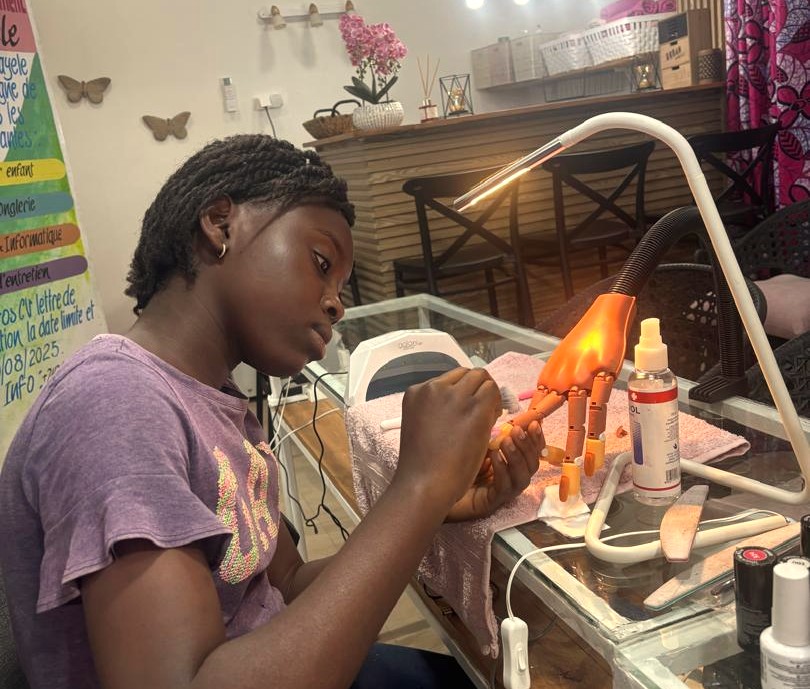
Last year, SNI helped establish a hair and nail salon at the center. But the purpose was never simply to build and equip a salon.

The goal was to create a place where skills could be passed on.

The girls receive professional training in hairdressing, beauty and nail art, giving them the opportunity to learn practical skills while continuing their education.

Once they have developed those skills, they can join the salon after school and begin earning some of their own money.

That first income represents much more than its monetary value.

It is the experience of having a skill somebody values. Of serving a customer. Of taking responsibility for your own work. And of discovering that something you have learned can help you become more independent.

For young people who have had fewer opportunities at the beginning of their lives, those experiences matter enormously.

Hair Salon Workshop for the girls at Bana Mayele

Preparing for Life Beyond Bana Mayele

Welding. Hairdressing. Nail art. Cooking. Catering. Gardening. Painting. Water delivery.

At first glance, these may seem like very different projects.

But they are all part of the same idea.

Our responsibility to the children at Bana Mayele does not end when they grow up.

Providing food, a safe home and an education is essential. But as teenagers approach adulthood, we also want to help answer a more difficult question:

What happens next?

We want young people leaving Bana Mayele to do so with more than memories of the support they received. We want them to leave with knowledge, practical skills, work experience and the confidence that they can create something for themselves.

And wherever possible, we want those opportunities to benefit the community around them too.

The welding course already reaches young people from three different centers. The salon can turn professional training into income. The water initiative can combine work experience with a service that improves everyday life for nearby families.

This is how support can begin to create something lasting.

From Support to Opportunity

None of these opportunities appear overnight.

A welding course needs teachers and materials. A salon needs to be built and equipped. A water-delivery vehicle needs to be purchased. Young people need training, guidance and someone willing to invest in their potential.

That is where you, our sponsors and supporters, become part of this story.

Your continued support allows us and our local partners to look beyond immediate needs and ask what will help these children five, ten or twenty years from now.

Our hope is that one day the young people learning these skills will no longer need our support.

They will be earning their own income, building their own lives and, perhaps, creating opportunities for somebody else.

From Vision to Action in Malawi:

Why Our Latest Visit Marks the Beginning of a Transformational New Chapter in Building Sustainable Communities in Malawi

For more than a year, Sponsorship Network and our local partner, I-Heart Malawi, have been developing a vision for a new kind of humanitarian project. One that combines child protection, education, sustainable agriculture, and community development into a single long-term initiative.

Our recent visit to Malawi marked an important milestone in that journey.

Our presence there meant far more than a project review. It created an opportunity to work alongside our local partners, assess progress on the ground, meet the children and caregivers, and refine the strategy that will guide the project over the coming years.

Following this visit, we have formally defined the project’s objectives, implementation phases, and long-term direction. With these foundations now in place, we are entering the next stage of development.

More Than Safe Homes

The heart of the initiative is the creation of Safe Homes for vulnerable children—including those living on the streets, orphaned, or abandoned.

Our vision extends beyond providing basic shelter.

We want every child to have access to education, emotional support, vocational training, and practical life skills that prepare them for adulthood and meaningful participation in society.

The goal is not dependence on aid, but opportunity.

Building a Sustainable Future

One of the most exciting aspects of the project is the development of a permaculture-based agricultural center.

Using regenerative farming principles, the land itself becomes part of the solution.

It provides nutritious food, practical education, vocational training, environmental restoration, and eventually an income stream that helps support the project over the long term.

Alongside agriculture, vocational workshops will equip young people with practical skills that improve employment opportunities and strengthen the local community.

A Partnership Built for the Long Term

None of this would be possible without the dedication of our partners in Malawi.

The project has been designed together with local leadership, ensuring that every stage reflects local knowledge, community needs, and a shared commitment to creating lasting change.

Our role is not simply to provide funding.

It is to work alongside our partners in building a model that is sustainable, locally rooted, and capable of growing for many years to come.

This Is Only the Beginning

During our visit, we documented not only the challenges, but also the hope, resilience, and extraordinary potential that exists within the community.

Over the coming months, we look forward to sharing more stories from Malawi through photographs, videos, and a documentary that follows the project’s development.

We Invite You to Join us on this Journey

Together, we are building Safe Homes, restoring opportunity, and investing in a future where vulnerable children are given the chance to learn, grow, and thrive.

Vocational Training and Education in Congo

From child support to a growing skills and education hub in Kinshasa

What is happening at the  Bana Mayele (Smart Children) center today is not the result of a single blueprint, but of consistent presence and hands on involvement over time.

Since 2021, Sponsorship Network International (SNI) has supported the development of the Bana Mayele Center in Kinshasa, Democratic Republic of Congo.

What began as a project focused on child care and education has grown into a broader initiative — supporting both children and youth from surrounding communities.

to provide a safe place for children facing difficult circumstances — a place where they could live, learn, and begin to heal trauma and rebuild stability in their lives.

Over the past five years, that steady support has allowed something tangible to take shape.

From a safe home, to a place of education, and now to a growing center for skills and opportunity — each step has built on the last.

From Care to Opportunity

Today, Bana Mayele continues to support close to a hundred children full-time, providing care, structure, and access to education. But as these children grow older, their needs begin to change.

Over time, a new need became clear:
young people require not only education, but also practical skills to become independent.

Creating Opportunities Through Skills, Vocational Training for Youth in Congo

To address this, Bana Mayele has developed a vocational training program in Congo, offering hands-on skills that can lead directly to income opportunities.

The goal is simple: to give young people the tools they need to move toward independence. The training focuses on hands-on, income-generating skills, including:

  • Welding and metalwork
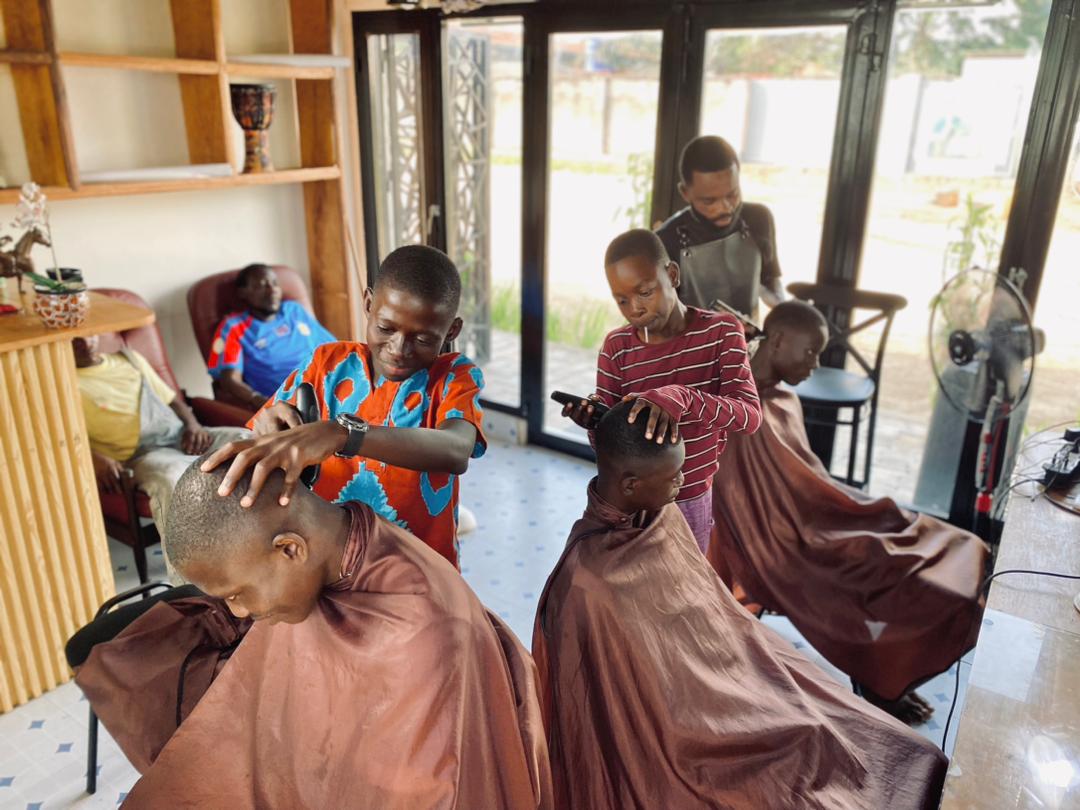
  • Aesthetics and beauty services (cosmetics, nails, hairdressing, barbering)
  • Cooking and food preparation
  • IT and digital basics
  • Sewing and tailoring
  • Gardening
  • Interior design and art
  • House painting

Participants also receive language support in French and English, improving their ability to work and communicate.

At the end of their training, they receive a certificate of completion and a basic starter kit.

Expanding Impact Beyond the Center

What started as a shelter for vulnerable children who have suffered from violent atrocities is now a thriving oasis of hope.

While the center continues to care for children living there, the training programs are beginning to include youngsters from surrounding communities — extending the impact beyond the walls of Bana Mayele.

The program now reaches not only children living at Bana Mayele, but also youth from surrounding communities in Kinshasa.

This expansion reflects the growing role of Bana Mayele as a community education and training hub.

Building Long-Term Change

The development of Bana Mayele shows how long-term support can evolve into broader impact.

From a basic shelter and education to vocational training and employment pathways, each phase builds on the last.

There is a strong need for vocational education in Congo, particularly for youth without access to higher education.

By continuing to develop this model, Bana Mayele can expand its reach and provide more young people with the tools they need to build independent lives.

Looking Ahead

While the vocational training hub is still developing, and like everything at Bana Mayele, it is growing step by step.

But it already reflects something important:
when support remains steady, it creates space for growth that goes beyond the original intention.

The vision for Bana Mayele continues to evolve — from care, to education, to opportunity.

It is about helping young people move from being supported to becoming self-reliant, and eventually shaping their own future.

Strengthening Education in Uganda and Zambia

How school development and community support are creating lasting impact

Across the projects SNI supports, progress often comes step by step — not through big announcements, but through practical improvements that make daily life more stable for children and communities.

In many parts of Uganda and Zambia, access to stable education and basic infrastructure remains a challenge. Through ongoing support, we are helping schools and communities strengthen their daily environment — creating better conditions for children to learn, grow, and stay in school.

This progress is clearly visible in the continued development of the Upendo School on Ssese Island, Uganda.

Upendo School, Ssese Island: Expanding Education Where It’s Needed

The Upendo School on Ssese Island has grown steadily over the past years. What began as a response to urgent needs — including rebuilding after multiple fires, a hurricane. Continually improving sanitation, and creating access to education — is now a school that children actively want to attend.

Originally, the school offered classes up to Primary 3, with plans for older students to transition into government schools. However, many children desired to be allowed to stay.

As one local partner shared:
“We asked their parents to take them to a government school, but they wouldn’t leave… they kept asking us to take them back.”

In response, a new classroom was built, allowing the school to expand to Primary 4 — ensuring that children can continue their education in a familiar and supportive environment.

Classroom for grade 4 at Upendo School
Upendo School in Lutoboka, Ssese Island
Improving School Infrastructure and Daily Conditions

To support the growing number of students, several important improvements were made:

  • Installation of a stone cooking stove, enabling the preparation of daily meals for hundreds of children
  • Upgrading the schoolyard with stone covering, reducing mud during the rainy season
  • Construction of new benches and tables, improving classroom conditions
  • Installation of a rainwater harvesting system, providing water for sanitation facilities

These improvements strengthen not only the learning environment, but also the health, safety, and daily stability of the children.

Zambia: Enabling Education Through Mobility

In Lusaka, Zambia, SNI supported the purchase of a new vehicle for the Brilliant Kids School — a practical but essential step in strengthening the school’s ability to operate effectively.

For the school, this vehicle is not a luxury — it is a tool that enables the work to continue.

It allows the team to manage school operations more efficiently.

In environments where infrastructure can be limited, mobility plays a key role in ensuring that children can access education consistently.

Supporting Education Through Practical Solutions

Across both Uganda and Zambia, the focus remains the same: supporting education through practical, real-world improvements.

Whether it is a classroom, a meal, or a means of transport, these are the elements that allow children to attend school consistently and build a future.

What connects these efforts is a shared approach:
listening, adapting, and responding to what is actually needed.

These are practical changes — but they carry real meaning for the children and communities involved.

Building Opportunity Through Education

Supporting vulnerable communities through local partnerships in Cebu & Bohol

In the Philippines, inhabitants with very limited resources suffer from natural disasters, unstable housing, and uncertain income. For children growing up in these conditions, education is not always a given possibility.

This is where SNI’s work quietly steps in — not with quick fixes, but with steady, practical support that helps create  more stability over time.

A Place to Learn, and Simply Be a Child

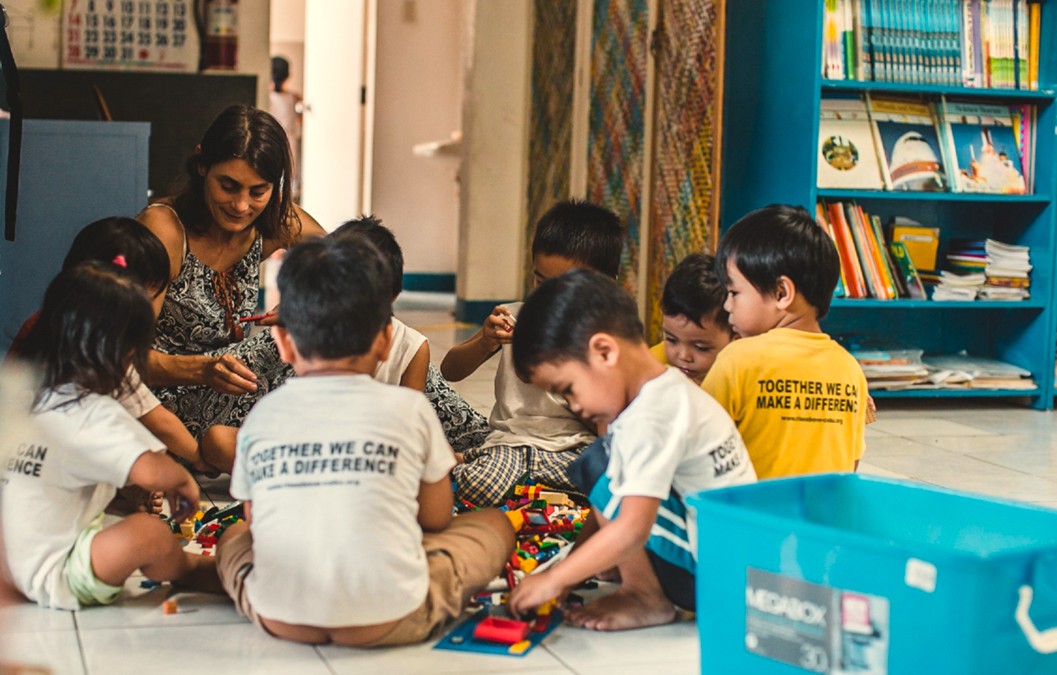
SNI supports community-based centers where children can come each day to learn, eat, and feel safe. For many, these spaces offer something they don’t often experience elsewhere: routine.

Here, the day has structure. There is time to learn, to play, and to be together. Small things matter — washing hands before meals, brushing teeth, sitting down together to eat. These are simple habits, but they build a sense of normalcy and care.

Just as important are the relationships. Children learn how to treat one another with respect, how to work together, and how to be part of a group. Over time, you can see the difference — in their confidence, in how they interact, in how they begin to see themselves.

Supporting Families Along the Way

Behind every child is a family doing its best to cope with difficult circumstances. Supporting children means supporting those families too.

Through livelihood initiatives, mothers are given the chance to earn an income — for example by creating bags from upcycled materials, learning gardening, sewing, jewelry making. It may seem like a small step, but it can ease daily pressure in a very real way.

When there is even a little more stability at home, children feel it. It becomes easier for them to stay in school, to focus, and to imagine a future that looks different from today.

Starting Early: The Importance of the STEPS Program

In many underserved communities, children begin elementary school without the basic skills needed to succeed. This gap is often not due to lack of ability, but to limited access to early learning opportunities — especially in areas where families are focused on meeting immediate needs.

The STEPS (Specialized Training and Education for Progressive Students) program addresses this challenge by focusing on early childhood education.

By providing structured preschool learning, the program helps children:

  • Build early literacy and numeracy skills
  • Develop confidence and social interaction
  • Become familiar with a learning environment
  • Grow curiosity and readiness for school

To expand this program to additional communities, new classroom space is being developed — creating a safe and dedicated environment where more children can access early education.

This early intervention is particularly important in communities affected by instability, as it helps children build the foundation they need to continue learning despite challenging circumstances.

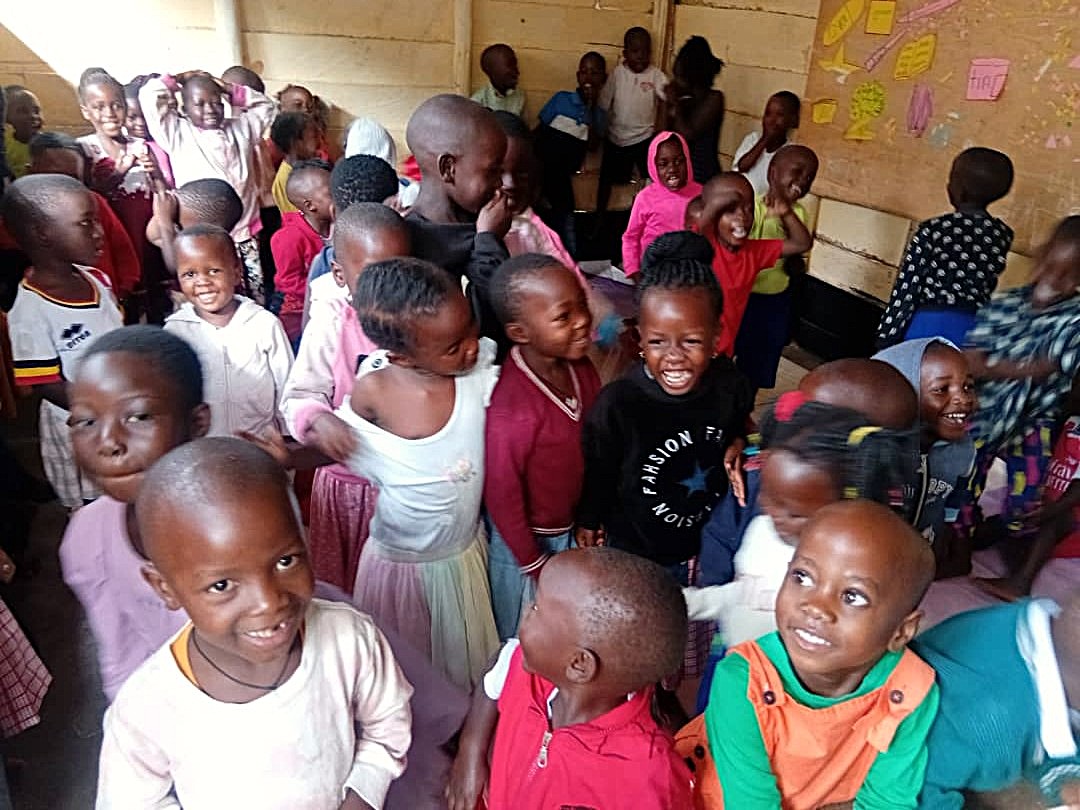
STEPS children's graduation
Building Stability Through Long-Term Commitment

What connects these initiatives is a shared understanding: meaningful change takes time.

By supporting both education and family stability, these programs go beyond short-term solutions. They create environments where children can grow consistently, even when external conditions remain uncertain.

For many families, this support represents more than access to education — it creates a sense of stability, possibility, and forward movement in situations where these are often difficult to maintain.

Through our continued partnership with local organizations in Cebu and Bohol, SNI remains committed to this steady, long-term approach.

Looking Ahead

The need for accessible, quality education remains significant, particularly in communities that are vulnerable to economic and environmental challenges. Expanding early childhood education and strengthening community-based support systems will continue to be key priorities.

With continued support, these initiatives can reach more children at a critical stage in their development — helping them build the skills and confidence they need to navigate an uncertain future.

Restoring Childhood for Malawi’s Street Children

How education, care, and sustainable farming are giving children a future

When most people think of Malawi, they picture Lake Malawi’s blue waters, warm smiles, and glowing sunsets. But behind this beauty lies a growing humanitarian challenge — thousands of street children in Malawi living without safety, shelter, education, or care.

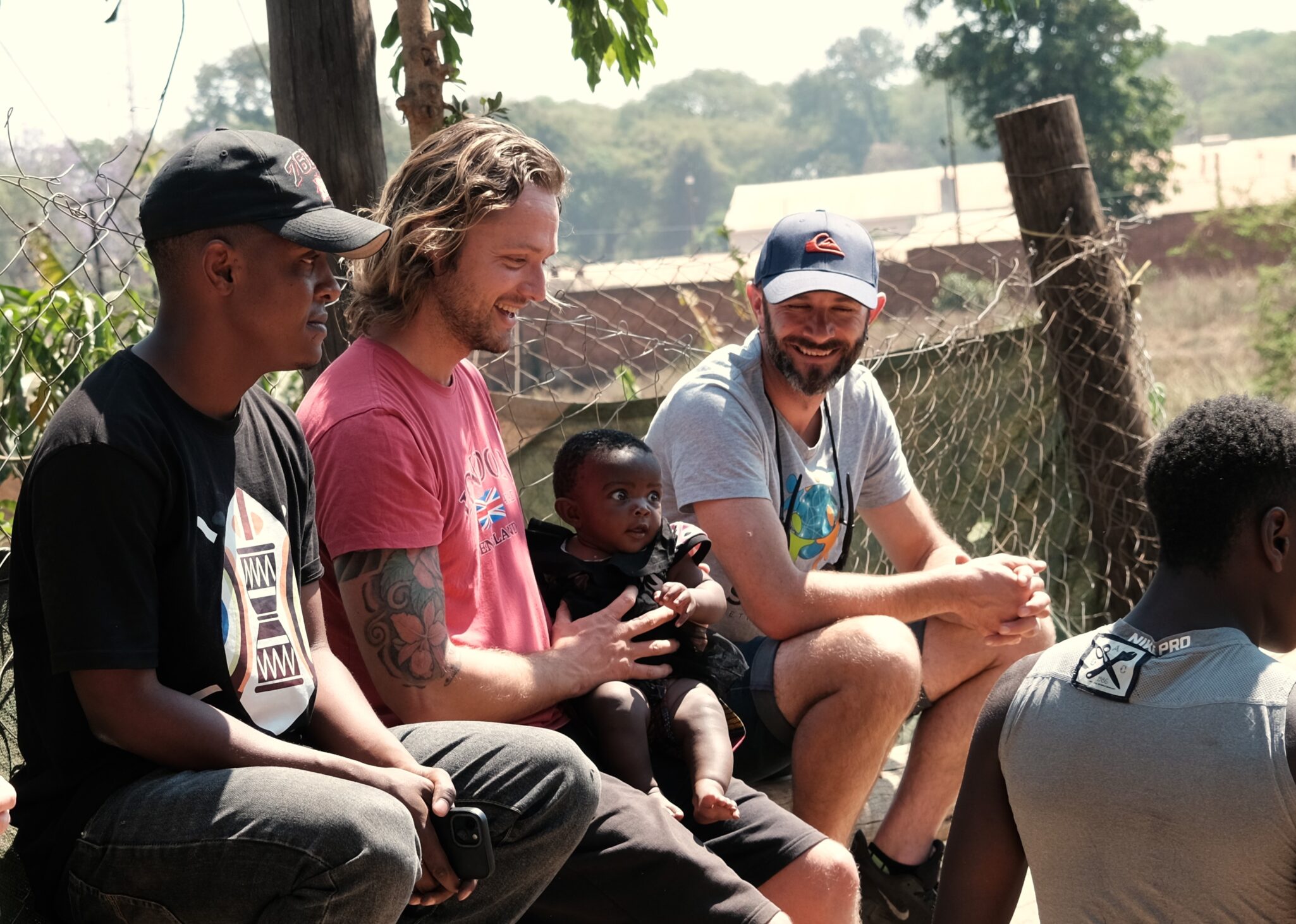
In October 2025, our team at Sponsorship Network Intl. visited Malawi to better understand this reality and to strengthen our partnership with I-Heart Malawi. What we saw was heartbreaking — and deeply hopeful at the same time.

The Reality for Street Children in Malawi

A Different Path: The I-Heart Project Malawi

The I-Heart Project offers a different future for street children and orphans in Malawi — one built on care, education, and self-reliance.

During our visit, we saw:

  • A daily free lunch program for street children in Lilongwe

  • Homes for boys and girls who once lived on the streets

  • A baby home caring for infants born to street workers and teenage mothers

  • Children attending school and vocational training, many for the first time in their lives

These children are no longer just surviving. They are learning, growing, and dreaming.

Education and Vocational Training: More Than School

Education is at the heart of long-term change. Our hope is that all children supported by SNI and I-Heart Malawi:

  • Attend local schools

  • Receive help with uniforms and supplies

  • Participate in vocational training courses, including carpentry, tailoring, farming, cooking, and basic computer skills

This combination of education and vocational training helps children gain confidence and practical skills they can use for life.

Sustainable Agriculture as a Long-Term Solution

One of the most powerful aspects of the I-Heart Project is its focus on sustainable agriculture in Malawi.

We are in the process of setting up:

  • A chicken and livestock farm in Blantyre, helping sustain two children’s homes (100 children total)

  • An organic farm with eco-built huts near a river

  • Looking for a 100-acre site near Lilongwe for a future permaculture-based community center

Through permaculture farming, the project will:

  • Produce food for daily meals

  • Generate income through local markets

  • Teach children responsibility and self-reliance

  • Reduce long-term dependence on donations

This model connects child care, education, and sustainable development in one integrated approach.

Why This Matters

Helping street children in Malawi is not about short-term aid. It’s about giving children:

  • A safe place to live

  • Access to education

  • Skills for independence

  • A sense of belonging

The I-Heart Project strives for not just escaping poverty — but building a sustainable future where children are given the right support.

How You Can Help Street Children in Malawi?

You can be part of this change:

  • Sponsor a child – help cover education, meals, and care

  • Support sustainable agriculture projects – fund long-term solutions

  • Volunteer – share your skills on the ground in Malawi

  • Partner with us – as an organization or foundation

Sponsorhip Network Intl.

[email protected]

Allmendstr. 37, 8914
Aeugst am Albis,
Switzerland

Newsletter

Sign up for our newsletter to be the first to hear about our latest plans, achievements, and news.

Preferred language:

Connect With Us

© 2026 Sponsorship Network International. All rights reserved.